Virtual DOM vs Real DOM: Which one is actually faster?
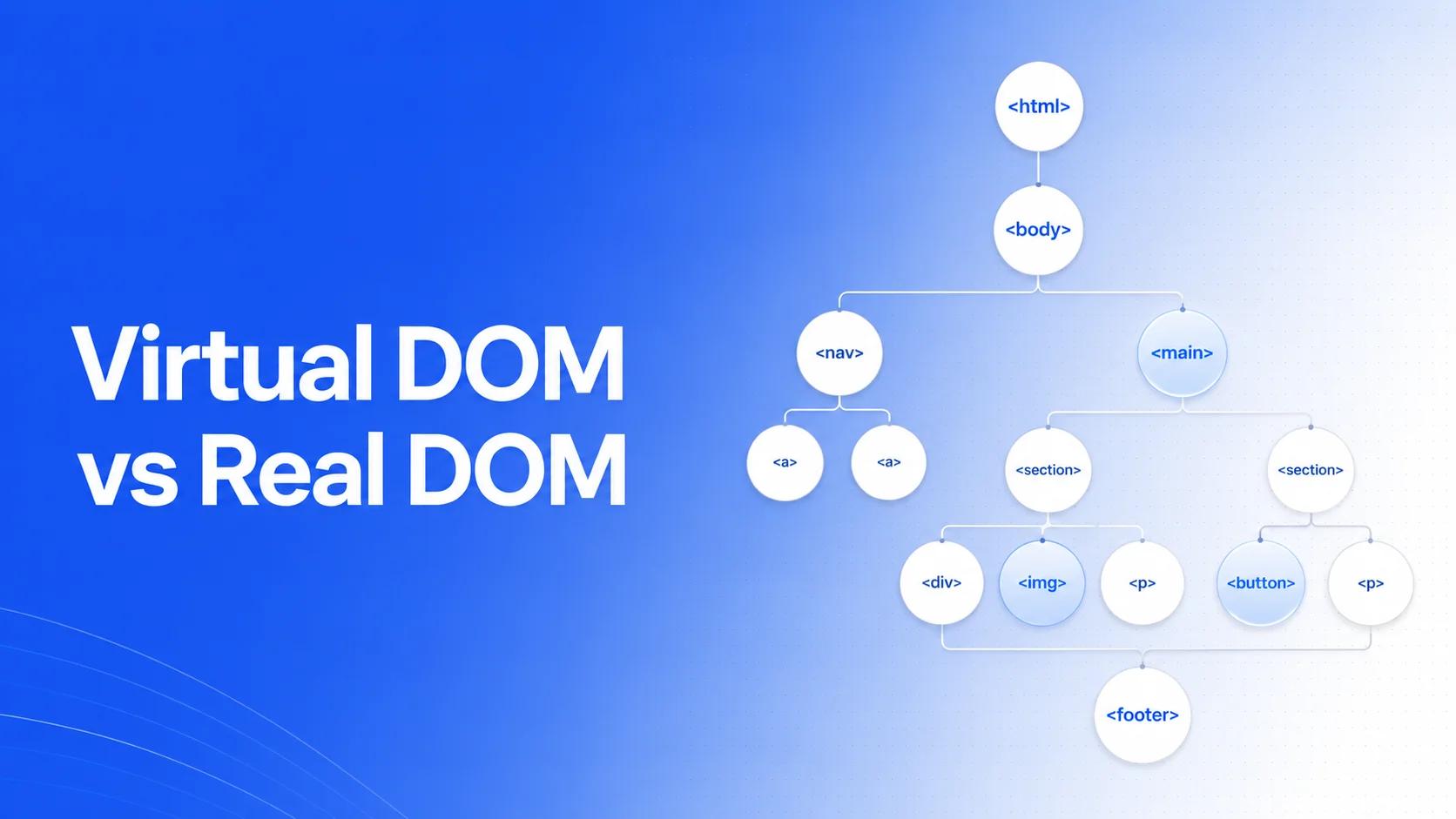
Ask ten developers which is faster, and you will get ten different answers. The Virtual DOM vs Real DOM debate has been running since React brought the concept mainstream, and in 2026, it’s still one of the most misunderstood topics in frontend development.
Here's the short answer: neither is universally faster. The right choice depends on what your application actually does, how often it updates, and how complex your UI state is.
If you need fast initial page loads with minimal interactivity, direct Real DOM approaches win. If you’re building a dynamic, state-heavy web app where dozens of components update simultaneously, Virtual DOM frameworks handle that complexity far more efficiently. And if raw runtime performance is everything, compiler-based frameworks like Svelte skip the virtual DOM entirely.
Understanding which applies to your product is what separates smart frontend decisions from expensive ones. Arismeta's web development team makes that call based on your product’s real requirements, not framework trends.
What is the Difference Between Virtual DOM and Real DOM?
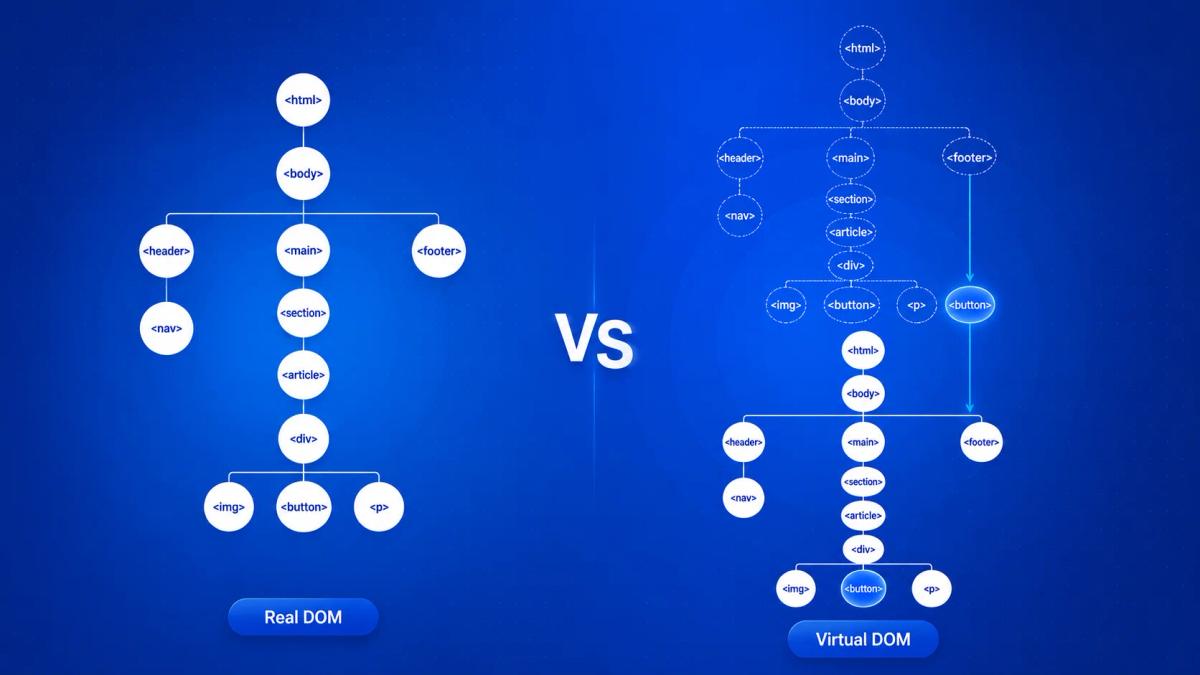
To understand which is faster, you first need to understand what each one actually is and how they interact with the browser rendering pipeline.
The Real DOM: Document Object Model is the browser’s live, structured representation of your webpage. Every HTML element you write becomes a node in a tree. When JavaScript updates that tree- changing a class, adding an element, removing a section- the browser responds immediately. It recalculates styles, reflows the layout, and repaints the affected portion of the screen. This process is called a reflow and repaint cycle, and it is computationally expensive when triggered frequently or across large portions of the page.
The critical characteristic of the Real DOM is that it is mutable and directly coupled to the browser rendering engine. Every change you make is a live instruction to the browser to do work; immediately, synchronously, and without batching.
The Virtual DOM is a concept, not a browser API. It is a lightweight JavaScript object, a mirror representation of the Real DOM, that lives entirely in memory. Frameworks like React maintain this in-memory copy of the UI. When your application state changes, React does not immediately touch the Real DOM. Instead, it updates the virtual DOM first, runs a diffing algorithm to calculate exactly what changed between the previous Virtual DOM snapshot and the new one, and then applies only the minimal set of changes necessary to the Real DOM in a single batched operation.
This process is called reconciliation. The diffing algorithm React uses is designed to run efficiently when comparing component trees and identifying the smallest set of mutations needed.
How Virtual DOM and Real DOM affect Website Speed

Speed is never one metric; it's a combination of initial render time, interaction responsiveness, and update efficiency.
Real DOM wins on initial render. Static pages with clean HTML and CSS load fastest because the browser doesn’t need to initialise a JavaScript framework. This is why server-rendered and statically generated sites consistently score highest on Core Web Vitals for content-heavy pages.
Virtual DOM wins on dynamic updates. When multiple components update simultaneously, think dashboards, live feeds, or collaborative tools; uncoordinated Real DOM mutations trigger separate reflow cycles, creating visible lag. Virtual DOM batches those updates into a single optimised patch, keeping interactions smooth regardless of update volume.
Core Web Vitals impact is real. Google’s interaction to Next Paint metric directly rewards applications that handle user input responsively. Well-implemented, Virtual DOM applications perform better here than poorly coordinated Real DOM alternatives which makes this a business and SEO concern, not just a technical one.
For brands investing in digital marketing and web performance, the DOM strategy chosen at the architecture stage shapes every performance metric downstream.
Why does Virtual DOM often feel faster in Web Apps?

This is the nuance most comparisons miss. The Virtual DOM doesn’t make individual DOM operations faster; a single direct Real DOM update is always quicker than routing it through a diffing cycle.
What it makes faster is managing many simultaneous updates without performance degradation. In production, state changes rarely happen in isolation. One user action might ripple across fifteen components. Without automatic batching, developers managing the Real DOM directly need to manually coordinate every mutation, and under pressure, that coordination breaks down.
The Virtual DOM removes that burden entirely. React’s Fiber architecture takes it further by prioritising urgent updates; a button press, a form submission: over background renders, making applications feel highly responsive even under heavy state load.
Which DOM is faster for Modern Frontend Development?

There is no single correct answer, but there is a clear decision framework.
1. Use a Virtual DOM framework like React or Vue when:
Your application has frequent, complex state updates across multiple components simultaneously. You are building a dashboard, a real-time feed, a collaborative tool, or any interface where many parts of the UI respond to shared state. The virtual DOM’s automatic batching and reconciliation will prevent the performance degradation that uncoordinated Real DOM manipulation produces at scale.
2. Use a compiler-based approach like Svelte or SolidJS when:
Raw runtime performance is the priority, and your team is comfortable with a build-step compilation workflow. These frameworks eliminate Virtual DOM overhead entirely by generating direct, optimised DOM instructions at compile time. Benchmark data consistently shows lower memory footprint and faster update cycles compared to virtual DOM alternatives, particularly valuable for performance-constrained environments like mobile web applications.
3. Use direct Real DOM manipulation or server-rendered HTML when:
Your content is largely static, your interactivity is minimal, and your primary performance goal is the fastest possible initial page load. Static site generators combined with server-side rendering deliver HTML directly to the browser without the JavaScript initialisation cost of any framework. For content marketing sites, blogs, and landing pages, this approach produces the strongest Core Web Vitals scores with the least engineering complexity.
4. Use Angular’s Incremental DOM when:
You are operating in a large enterprise environment where bundle size predictability and long-term framework stability matter more than bleeding-edge performance optimisation. Angular's approach updates the DOM in place without maintaining a full Virtual DOM snapshot, which reduces memory allocation in large component trees.
The framework choice is not the whole story, however. How the chosen approach is implemented matters as much as which one is selected. Lazy loading, code splitting, server-side rendering, image optimisation, and clean attribution infrastructure all sit on top of the DOM strategy and collectively determine the real-world performance a user experiences.
Explore Arismeta’s full-service web development and digital marketing capabilities to see how these technical decisions are applied to real client products.
Conclusion: How Arismeta Builds Faster Websites Using the Right DOM Strategy

At Arismeta, the frontend framework decision is never made on the basis of team preference or industry trend. It is made by working backwards from the product’s actual performance requirements.
For complex, interaction-heavy web applications where component state changes frequently across the UI, React’s Virtual DOM and concurrent rendering capabilities provide the right foundation: automatic update batching, prioritised rendering, and a mature ecosystem of performance tooling.
For marketing-facing websites, landing pages, and content properties where initial load speed and Core Web Vitals are the primary metrics, Arismeta builds with static generation and server-side rendering at the core; delivering prebuilt HTML to the browser without framework initialisation overhead and pairing that with a headless CMS architecture for flexible content management.
For performance-critical applications where runtime footprint matters particularly on mobile, compiler-based approaches that generate direct DOM instructions without a diffing layer are evaluated as the right architectural fit.
What stays consistent across every build is the measurement layer. Faster websites are only valuable if performance gains are trackable and attributable to business outcomes. Understanding how campaign attribution and UTM tracking are set up correctly is part of every web project Arismeta delivers because a fast website that can’t be measured is a missed opportunity.
Learn more about Arismeta’s approach to web development and the team behind it, and see what a technically rigorous, performance-first build looks like from architecture decision to live deployment.
FAQs
1. Is Virtual DOM faster than Real DOM?
Not always. Virtual DOM is faster at managing frequent, complex updates across multiple UI components simultaneously. For simple or static interfaces, direct Real DOM is faster because it skips the diffing overhead entirely.
2. Why use Virtual DOM if Real DOM can be faster in some cases?
Because real applications involve many simultaneous state changes, not single isolated updates. Virtual DOM handles that coordination automatically, preventing the performance degradation that unmanaged Real DOM manipulation creates under production conditions.
3. Does React’s Virtual DOM help with SEO and Core Web Vitals?
Yes, when implemented correctly. React applications using server-side rendering via Next.js perform strongly on Core Web Vitals, particularly interaction to Next Paint, which directly influences Google search rankings.
4. What makes Svelte different from React in terms of DOM performance?
Svelte compiles components into direct DOM instructions at build time, eliminating the virtual DOM and its runtime diffing cycle. This produces lower memory usage and faster update speeds at the cost of a smaller ecosystem compared to React.
5. How do I choose between Virtual DOM and Real DOM for my project?
Base the decision on your application’s update complexity. Frequent multi-component state changes favour Virtual DOM frameworks. Simple or content-heavy products favour static or server-rendered approaches. When in doubt, work with a development partner who assesses requirements before defaulting to a framework.